Cart
0
You may also like



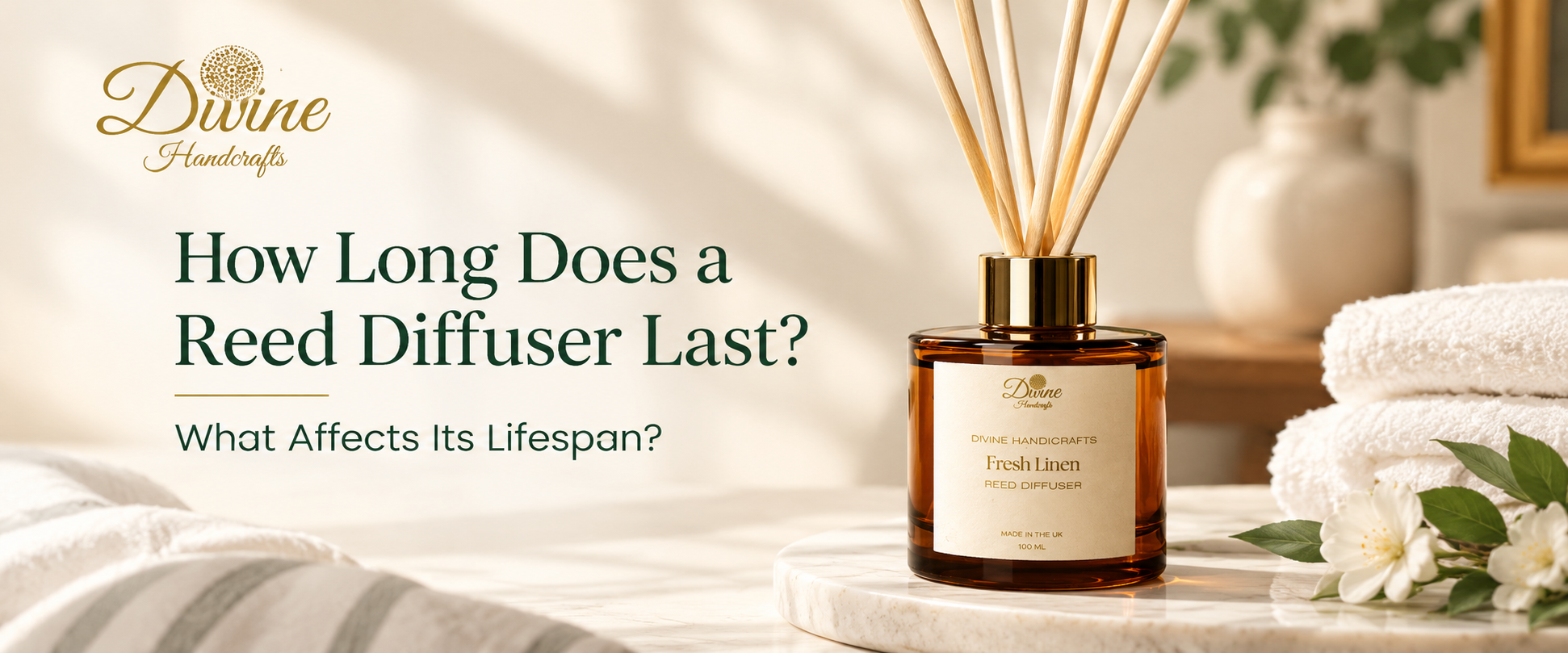
A reed diffuser is a simple way to keep your home smelling pleasant throughout the day. Unlike a scented candle, it does not need a flame, and unlike an electric diffuser, it does not need a power supply. Once you have set it up, the fragrance passes through the reeds and spreads into the room with little daily effort.
One question comes up often: how long do reed diffusers last? The answer depends on the volume of fragrance liquid, the formula, the number of reeds, room temperature and where you place the bottle. Two diffusers of the same size can run out at different times, even when you use them in the same home.
A 100ml reed diffuser is a useful size for many everyday spaces, but the bottle capacity alone cannot tell you how many weeks the fragrance will last. This guide explains what affects reed diffuser lifespan, how to slow down evaporation, when to replace the reeds and what to check before assuming your diffuser has stopped working.
How Long Does a Reed Diffuser Usually Last?
There is no single lifespan that applies to every reed diffuser. UK retailers publish different estimates for their products, with some 100ml diffusers advertised for around four to eight weeks and others for eight to twelve weeks. These are product specific estimates, not results from one shared test, so they should not be treated as a guaranteed industry standard.
The best estimate for a particular diffuser should come from its maker, based on the actual fragrance formula, reeds and bottle. Room conditions also matter. A diffuser in a cool hallway may use its liquid more slowly than one beside a sunny window or in a warm room with a constant draught.
Divine Handicrafts lists both the Peony Reed Diffuser and Fresh Linen Reed Diffuser in a 100ml format. Their current product pages do not give a tested lifespan in weeks, so it would be misleading to promise that either one lasts for a set number of months. The practical advice in this guide can help you manage evaporation, but an exact duration needs testing with the product itself.
What does bottle size tell you?
Bottle capacity gives you the volume of fragrance liquid, not the rate at which that liquid will evaporate. A larger bottle can provide a longer period of use when the formula and conditions are similar, but a high reed count or warm placement can reduce that advantage.
|
Bottle size |
What to know |
|
50ml |
Often suited to a small space or a short term fragrance trial, depending on the formula and reeds. |
|
100ml |
A versatile size for many homes, including bedrooms, hallways and smaller living spaces. |
|
200ml |
Holds twice the liquid of a 100ml bottle, but it will not always last twice as long if the reed setup or room conditions differ. |
Pro tip: Check the product label for a stated lifespan before comparing two diffusers. If the maker does not publish a tested duration, treat any general estimate as a guide rather than a promise.
Six Things That Affect Reed Diffuser Lifespan
1. The fragrance formula
The liquid inside the bottle plays a major role in how quickly a reed diffuser empties. Fragrance materials and the diffuser base affect how the liquid moves through the reeds and how readily it evaporates into the air. This is one reason two 100ml diffusers can have different lifespans, even when they look almost identical.
The smell itself is not a reliable measure of how long the liquid will last. A fragrance may feel strong at first and become more subtle as you get used to it, while the bottle continues to lose liquid at its usual rate. The product formula and its performance over time matter more than the first impression alone.
2. The number of reeds
Every reed provides another surface for the fragrance liquid to travel through and evaporate from. More reeds can produce a fuller fragrance, but they can also increase liquid use. Fewer reeds may give a subtler scent and help the bottle last longer, though the result depends on the type of reeds and the fragrance formula.
Start with the quantity recommended by the manufacturer. If the scent feels too strong in a small room, reduce the number of reeds only if the instructions allow it. If the fragrance feels weak, check the placement and condition of the reeds before adding more. Making one change at a time helps you judge the result.
3. Room temperature and sunlight
Heat can increase the rate at which fragrance liquid evaporates. A bottle placed on a sunny windowsill or beside a radiator may empty faster than one kept in a cooler position. Direct sunlight can also affect some fragrance materials over time, so a shaded shelf is a better starting point.
This is worth bearing in mind during warmer UK summers and when central heating is on in winter. A diffuser that lasts well in one room may use its liquid faster in another. Keep it away from heaters, fireplaces and other warm surfaces to help maintain a more consistent rate of use.
4. Airflow and ventilation
Air movement helps carry fragrance around a room, but strong airflow can also increase evaporation from the reeds. An open window, a busy doorway, a fan or an air conditioning vent may cause the fragrance to disperse before you notice it for long. This can lead you to turn the reeds or add more sticks when neither change is needed.
Place the diffuser in an open spot with gentle natural air movement. Avoid closed cupboards, where the scent may collect in a small space, and draughty positions where the fragrance disappears quickly. A suitable position can improve the scent experience without the need to use more liquid.
5. How often you turn the reeds
Turning the reeds can refresh the scent because it exposes the saturated ends to the air. However, it also places more wet surface above the bottle, which may increase evaporation. Turning the reeds every day is not necessary for many diffusers and can make the liquid run down faster than expected.
Follow the instructions supplied with your product. If the manufacturer does not state a schedule, use the scent level as your guide and turn the reeds only when the fragrance needs refreshing. Handle them carefully, as the liquid may mark furniture or irritate skin.
6. The condition of the reeds
Reeds can collect dust or become less effective over time. If they no longer draw up the liquid well, the fragrance may feel weak even when there is plenty left in the bottle. This does not always mean the fragrance liquid has gone off or the diffuser has reached the end of its useful life.
Check the reeds and the liquid level before replacing anything. If the reeds look dirty, damaged or clogged, follow the manufacturer's advice on replacement. Use fresh reeds when changing to another fragrance, as old ones can retain the previous scent and affect the new one.
How to Make a Reed Diffuser Last Longer
You do not need to keep adjusting your diffuser to get good use from it. The aim is to find a sensible balance between scent strength and the rate at which the liquid runs out. A few steady habits can help you avoid waste without leaving your home fragrance too faint to notice.
Use these practical steps as a starting point:
Pro tip: If you want to compare how long two diffusers last, use them under similar room conditions and note the date you first insert the reeds. Record the number of reeds and how often you turn them. This gives you a more useful comparison than looking at the bottle size alone.
Why Has My Reed Diffuser Run Out So Quickly?
A diffuser may empty faster than expected for several reasons. The bottle could be in a warm position, the room may have strong airflow, or the number of reeds may be higher than the space needs. The formula also affects evaporation, which means that a short lifespan is not always caused by poor care.
Before deciding that something is wrong, review how you have used the diffuser. Look at the bottle level, check its position and think about how often you have turned the reeds. If you use a new diffuser in the same room, keep the conditions as close as possible so you can compare its performance fairly.
It is also worth separating fragrance strength from liquid consumption. You may stop noticing a scent because you have become accustomed to it, even though other people can still smell it. This is known as olfactory adaptation. Ask someone else if they can detect the fragrance before turning the reeds or adding more.
A quick guide to common problems
|
What you notice |
Possible cause |
What to do |
|
The bottle empties quickly |
Heat, strong airflow or a high reed count |
Move it to a cooler spot and review the reed quantity. |
|
The scent feels weak but the bottle is still full |
Poor placement, dusty reeds or olfactory adaptation |
Check the position and reeds, then ask someone else to assess the scent. |
|
The scent becomes strong after turning the reeds |
Freshly exposed saturated surfaces |
Allow the scent to settle and avoid frequent turns. |
|
The liquid level barely changes |
Slow evaporation, a small number of reeds or unsuitable reeds |
Check the product instructions and give the reeds time to absorb the liquid. |
|
A new fragrance smells different from the old one |
The previous scent may remain in used reeds |
Use fresh reeds when changing fragrance. |
When Should You Replace the Reeds or the Diffuser?
You do not need to replace the whole diffuser just because its fragrance has become less noticeable. If the bottle still contains liquid, inspect the reeds and check the position first. Replacing the reeds may help when they no longer absorb or release fragrance as intended, but the result depends on the product and the condition of the liquid.
When the bottle is empty, use a refill only if the manufacturer confirms that one is suitable. Clean and reuse the vessel only when its design and the refill instructions allow it. Do not mix leftover fragrance with a new formula, and do not pour unused diffuser liquid down a sink or outdoor drain.
If the liquid has changed in appearance, developed an unusual smell or leaked from the bottle, stop using it and follow the manufacturer's care and disposal instructions. Avoid handling the liquid with bare hands, and keep it away from children, pets, flames and surfaces that may be damaged.
Frequently Asked Questions
How long does a 100ml reed diffuser last?
There is no fixed duration for every 100ml reed diffuser. Published UK retailer guidance varies from around four to eight weeks for some products to eight to twelve weeks for others. The formula, reeds, room temperature and airflow all affect the result, so use the estimate supplied by the maker when available.
How can I make my reed diffuser last longer?
Keep the bottle away from heat and direct sunlight, avoid strong draughts, and use only the number of reeds you need. Turn them according to the manufacturer's advice rather than every day. These steps may reduce liquid use, although they cannot guarantee a set lifespan.
Does using more reeds make a diffuser run out faster?
It can. More reeds increase the surface area through which the fragrance can evaporate, which often produces a stronger scent but can shorten the time the liquid lasts. Start with the recommended number and make gradual changes if the fragrance feels too strong or too weak.
Should I turn my reed diffuser every day?
Daily turning is not needed for many reed diffusers. Frequent turning can increase evaporation and use up the liquid faster. Follow the care instructions for your product, and turn the reeds only when the scent needs refreshing.
Can I refill an empty reed diffuser bottle?
Only use a refill that the manufacturer confirms is suitable for your bottle and fragrance. Follow the cleaning and refilling instructions, and replace old reeds when advised. Avoid mixing different fragrances or adding water to the original formula.
Does a stronger scent mean my diffuser will last less time?
A stronger scent can result from more reeds, warmer conditions or a formula that releases fragrance at a faster rate. These factors may also increase liquid use, but strength alone cannot predict lifespan. The most useful guide is the amount of liquid used over time under consistent conditions.
Make Every Drop Count
A reed diffuser works best when the fragrance, reed quantity and room conditions are in balance. Keep the bottle away from heat, use a suitable position and avoid turning the reeds more often than needed. These simple steps can help you enjoy your home fragrance while reducing unnecessary liquid use.
Divine Handicrafts offers two distinct 100ml options for UK homes. The Peony Reed Diffuser brings together peony, oud, rose, vanilla and amber for a floral fragrance with added warmth, while the Fresh Linen Reed Diffuser features white musk, eucalyptus, jasmine, orange and sea kelp for a clean fragrance profile. View the Peony Reed Diffuser or the Fresh Linen Reed Diffuser for the current product details.
Check the care instructions supplied with your diffuser and use the fragrance in a way that suits your home. A little attention to placement and reed care can make the experience more consistent, without relying on an untested promise about how many weeks the bottle will last.


